Header Home About Me Shop Freebies Contact FB IG Pinterest TPT Bloglovin email
Showing posts with label story elements. Show all posts

Monday, October 3, 2016

Compare and Contrast with The Three Little Pigs!

I'm in the midst of teaching a big fairy tales/folk tales/fables unit at the moment and it's been one of my favorite units to teach so far! There are so many fun, classic, high-interest stories that kids love to read. Before we began reading any fairy tales, we created this schema chart together of all the things we thought we could find in a fairy tale. Their ideas were actually pretty dead-on!


One of our big standards to teach during this unit is comparing/contrasting similar stories. There are so many great versions of the classic fairy tales to choose from! One of my favorite fairy tales to use for comparing and contrasting is The Three Little Pigs.

For this unit, I read three different versions of The Three Little Pigs and my students compared and contrasted each one by analyzing story elements such as characters, setting, and plot.

We learned that in fairy tales, things usually happen in "threes", and of course the 3 Little Pigs is no different! I had the idea for my students to create Compare/Contrast Story Houses to create one big book. I absolutely love how they turned out and my kids had a blast creating them!

First, I created a little graphic organizer and my students filled one out for each story.


My students loved the fact that I included a "villain" square on our graphic organizer since there was a different villain in each version we read! We glued the graphic organizer to a piece of construction paper to create the first book page, then flipped it over and added the front cover to the opposite side.


To complete the first page, we added a roof by cutting a piece of 4.5x6" construction paper into a triangle shape and gluing it to the top of the page. This is where we wrote the title and author for each story we read!


We repeated the same process for each book we read and matched the book page colors to each "pig house" from the original story: yellow for straw, brown for sticks, and red for bricks! Each time we finished a new story page, I attached it to their book.


By the time we were done, we had 3 pages to complete our compare and contrast story house! I stapled the rest together to create an accordion book.


Creating the story house book was such a great, creative way to compare and contrast the different stories. My students absolutely loved making them as well! They really added so many details to their illustrations and were able to practice writing story summaries in the plot section.

There are many different versions of The Three Little Pigs to choose from, but here are the versions we read to create our compare/contrast story houses: The Three Little Pigs by James Marshall, The Three Little Javelinas by Susan Lowell and Jim Harris, and The Three Little Wolves and the Big Bad Pig by Eugene Trivizas.

To end our unit, we read one of my all-time favorite versions: The True Story of the Three Little Pigs by Jon Scieszka. It's the story of The 3 Little Pigs from the Wolf's point of view!

The most unique version we read was The Three Little Wolves and the Big Bad Pig. The houses and settings were completely different from the original, and it had a happy ending too! Because the settings were so unique (and there were 4 of them!) I had my students split themselves up into groups of 4 and use giant whiteboards to create four window notes. Each student was responsible for drawing a picture of the four different houses the wolves built in the story. Then they took turns retelling the story to their fellow group members. Such an easy and engaging activity!

If you're interested in using the Three Little Pigs Compare/Contrast Story House with your fairy tale and folktale unit, you can grab it here in my TPT store by clicking the picture below! Differentiated graphic organizers, the cover page, and directions for making the book are all included in the pack. The great news is, you can create it using as many or as few versions of The Three Little Pigs as you want! It's such a versatile activity. Click below to check it out!

SaveSave

Sunday, January 3, 2016

Teaching Story Elements with Kevin Henkes Books

I just love Kevin Henkes' books. Every. Single. One of them. Not only are they creative stories, but they also have great life lessons to teach my students as well. Another reason I love his books is they have the most incredible characters; and they really lend themselves as great resources to use while teaching story elements and reading comprehension!

A class favorite that I always read every year is Lilly's Purple Plastic Purse. It's a great story, especially for the beginning of the year when you are introducing rules and procedures in the classroom!


In this book, Lilly brings all sorts of fun little trinkets to school and she is excited to share them with the class - a little TOO excited. She interrupts the teacher multiple times until, finally, the teacher takes her prized possessions away and she gets just a little upset. Various shenanigans occur throughout the story until she finally realizes that she shouldn't have acted the way she did. The book is great for a character study on the main character, Lilly, because she changes so often throughout the story and goes through a myriad of emotions. So I used the book for a little study on identifying character traits and describing how the main character changed throughout the story from beginning to end. We created a little anchor chart together and these are all of the words my students came up with to describe Lilly - they did a great job!


You can see from the web words how much the main character changed throughout the story and it was a great discussion to have with my kids to help them understand how to describe her!

The next day, we read the story again and my focus was to have them work on retelling the story by sequencing events. We used the picture retelling cards from the wonderful Guiding Readers K-1 pack by Deanna Jump and Deedee Wills. I put my students into small groups and gave them each a set of retelling cards. They then had to work together with their groups to try and retell the story by putting their pictures in order from beginning to end. It was awesome for me to walk around and hear them all collaborating together on why a certain picture should be moved; or put in this spot; and why, etc. It really helped them think more deeply about the events of the book.


After they put their pictures in order, we came back together as a class and I put the pictures in the correct order so they could check their work. They were SO excited when they got a picture in the correct sequence! Having my students talk with each other and use visuals to retell the story really helped them have a more in depth understanding of what happened in the book, rather than just hearing me stand up there and talk about it as they listened.

Once we finished our group work, my students then got a smaller version of the retell pictures and had to sequence the pictures again on their own. This was a great check for understanding for me on who really understood the sequence of events and what little friends still needed a bit of support on it!
(The small retell pictures are also from the ladies' Guiding Readers pack)!


On the third day, we read the story again, this time by listening to this version on Youtube, just to change it up a little bit so that it didn't get too stale for them:


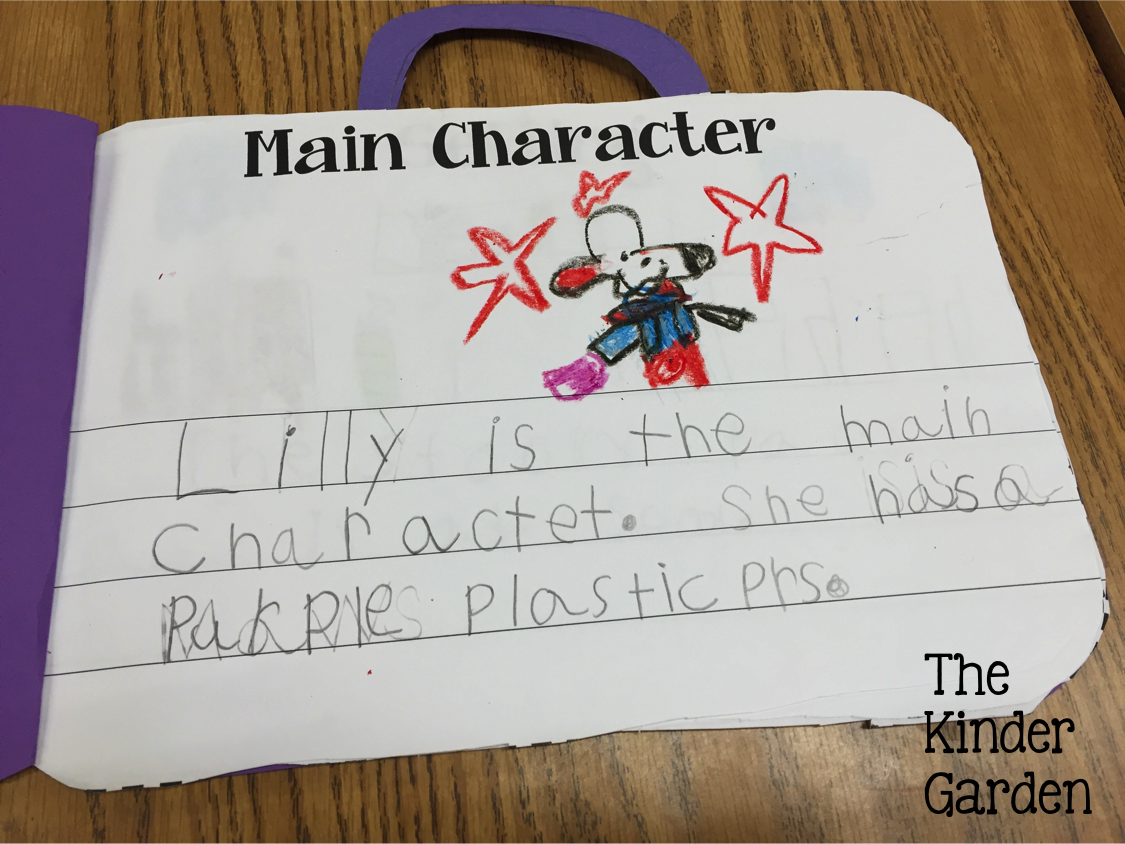
I liked this version because it is read by a teacher and she stops and asks little comprehension questions here and there! After hearing the story, we focused on story elements: characters, setting, plot, problem, and solution. Mind you, even though our activity on the third day focused on story elements, we had been talking about story elements and learning about them long before this day, so they had a little background knowledge. To make it fun, we made a little book in the shape of a purse: Lilly's Purple Plastic Purse Story Elements! The kids did SUCH an awesome job writing and illustrating these details about the story. They absolutely loved that they had their own little plastic purse at the end, too! It was the perfect culminating activity for this story.


Another Kevin Henkes book that I love reading to my students is Kitten's First Full Moon. It's a simple book, but a great beginning book for teaching students how to retell and summarize a story.


First, I read the story aloud and, as we go through the story, I'll stop periodically and ask my students what the kitten did using order words such as first, next, then, after that... this helps them recall the order that events occurred in the story because they've got that vocabulary to guide them. After discussing the main events in the story, I modeled how to summarize the story in their own words. I told my kids excitedly that they would get to tell the story with the words that THEY wanted, as if they were going to be the author. They were so into it! I whipped up this little writing craftivity to put with their summaries and they turned out so great! In the story, the kitten sees the moon and is attempting to get to it because he thinks it is a bowl of milk. In the craftivity, he is peeking over the edge to try and get to the moon, which is popping off the page 3D style!


Here are some student samples of the Kitten's First Full Moon story summary craftivity:


If you're interested in adding this story summary/reading comprehension craftivity to your Kevin Henkes' study, you can grab it from my TPT store by clicking the picture below! There are multiple differentiated writing template options available in the pack to help you best fit the needs of your students!

 photo Kitten Full Moon_zpsde9wmaps.png

I could go on and on about all of his books... they are all wonderful options for teaching story elements and reading comprehension skills! What are some of your favorite Kevin Henkes books?