Header Home About Me Shop Freebies Contact FB IG Pinterest TPT Bloglovin email

Monday, March 7, 2016

Plants and Living Things {plus freebies!}

Spring is just around the corner! With the sunshine and warmer weather, it makes it the perfect time of year to begin a study on plants and living things.

 
To gain some background knowledge, I always start off by creating some sort of anchor chart or schema chart of all the things we think we know about plants. It's always interesting to see what the students come up with. A lot of times, they surprise me with how much they know!


After creating our schema chart, I always tell my students that they are going to become scientists so that we can find out everything we want to know about plants and living things! I talk about all the things that good scientists have to do with this little anchor chart, which you can download for FREE by clicking on the photo below!

 photo what do scientists do picture_zps7vl3kmnl.png

The perfect way to implement all three of these things is to have students create a journal. They can use this to draw and write observations, record facts, and more! The first thing we do at the beginning of the unit is practice making observations. We go outside for a walk and draw a picture of EVERYTHING we can observe. 


I remind them to include details about everything they can see. Then, we come back inside and share our observations with a partner!

The next day, we learned about the difference between living and nonliving things. We used some real pictures of objects and sorted them between living and non-living. I got the pictures here for free from the blog Chalk Talk! 

I made up our own little version of the picture sort for students to work on independently. You can download it for free by clicking the picture below!

 photo plants and living things sort picture_zpsuzgze5p7.png

We then went on another observation walk outside and recorded our observations of all the living and non-living things we saw.


Once we had a little background knowledge on living things, it was time to observe and inspect the seeds we would be planting. I gave each student a magnifying glass and we observed our seed using our five senses in our plant journals. They had SO much fun looking at the seed up close!


Now we are ready to plant our seeds! I called kids up 4-5 at a time and let them pour soil in a cup, observe and feel the soil, and plant their seed in the middle.


Once we planted seeds, it was time to find out what plants need to thrive and grow! We watched one of my favorite songs about the Needs of a Plant from Harry Kindergarten:


And then we used our plants and living things journals to record our learning!


We planted our seeds, watered them, and then put them outside everyday to get some sunshine! I just used a big paper box lid to put all of our plant cups in to make it easier to carry it in and out of the classroom. As they started to grow, we learned about and labeled all the parts of a plant in our journals next!


Day by day, we checked in on our plants and used the observation pages of our journals to record what our plants looked like every couple of days!


You can print as many of the observation journal pages as you need for however many days you plan on letting the kids observe their plants before taking them home.

Once the plants grew enough to see the stem and leaves pop out, I let my students take their plants home! They were so excited! I had more than one student tell me that they went home and planted their flowers in their yard at home.

You can find all of these activities and more (including plant vocabulary cards) in my Plants and Living Things Observation Journal in my TPT store. Just click on the picture below and it will take you right there!

 photo plant journal cover page_zpsoefidz46.png

Thursday, February 18, 2016

Changing Up Our Word Work Routine: Long Vowel Teams ai ay

Halfway through my first year in first grade, we have officially gone deep into learning new phonics patterns, especially vowel teams. Each week I am introducing one to two new patterns; and it can be easy to get into a rut of introducing them all the same way with the same activities each week. Read the word. Write the word. Draw the word. Lather, Rinse, Repeat. Can you relate? Here's a tip. The easiest way to change it up and make it new and exciting for your students is to integrate a monthly or seasonal theme into the activity they'll be doing. And here's the kicker - it could be the exact same word work activity they've been doing since time began, but once you add in some new fancy themed clip art, the students get ridiculously excited and buy in to what you are teaching.

We began working on long a vowel teams ai & ay; focusing on each phonics pattern for a week at a time. By the time we got through the two weeks, we were ready to compare and sort words with each vowel team. I'm lucky enough to have a smartboard in my classroom this year, so I created a quick snowman sort for my students to interact with. They read the word on the snowman and sorted into the correct vowel team category.


Once we sorted and read all of our words, my students completed their own snowman ai/ay sort. I created two different versions to meet the needs of my learners. Some students had a sort with pictures only; and added their own labeling word. Other students who needed more support had a snowman sort with the actual words on it so that they could visually see the phonics pattern.


If you'd like to use these differentiated sorts in your classroom, click on the picture below to grab it from my TPT store! (Note: The smartboard file is not included due to clip art copyright, but I've created color cards for students to sort in a pocket chart!).

 photo snowman sort ai ay_zpswj8h8bjh.png

Another new activity I came up with to practice sorting our long a vowel team words used just one simple material: index cards! I gave each student a blank one and told them to choose either one ai or one ay word to write on their card.


On the back, they had to write a sentence using their ai/ay word.


Then, we sorted our words together in the pocket chart.


After sorting our words, we read them together aloud. My students loved it; and so did I - how great is it to have a no-prep, interactive activity like this?

I also love to find fun videos and songs on youtube for my students to get up, move, and sing with. They absolutely loved this surfer themed video for sorting ai/ay words. They laughed so hard at his "Heyyyy duddddeeee!" surfer voice.


I hope this post was able to give you a few new fun, quick ideas to use during your word work routine! 

Sunday, January 3, 2016

Teaching Story Elements with Kevin Henkes Books

I just love Kevin Henkes' books. Every. Single. One of them. Not only are they creative stories, but they also have great life lessons to teach my students as well. Another reason I love his books is they have the most incredible characters; and they really lend themselves as great resources to use while teaching story elements and reading comprehension!

A class favorite that I always read every year is Lilly's Purple Plastic Purse. It's a great story, especially for the beginning of the year when you are introducing rules and procedures in the classroom!


In this book, Lilly brings all sorts of fun little trinkets to school and she is excited to share them with the class - a little TOO excited. She interrupts the teacher multiple times until, finally, the teacher takes her prized possessions away and she gets just a little upset. Various shenanigans occur throughout the story until she finally realizes that she shouldn't have acted the way she did. The book is great for a character study on the main character, Lilly, because she changes so often throughout the story and goes through a myriad of emotions. So I used the book for a little study on identifying character traits and describing how the main character changed throughout the story from beginning to end. We created a little anchor chart together and these are all of the words my students came up with to describe Lilly - they did a great job!


You can see from the web words how much the main character changed throughout the story and it was a great discussion to have with my kids to help them understand how to describe her!

The next day, we read the story again and my focus was to have them work on retelling the story by sequencing events. We used the picture retelling cards from the wonderful Guiding Readers K-1 pack by Deanna Jump and Deedee Wills. I put my students into small groups and gave them each a set of retelling cards. They then had to work together with their groups to try and retell the story by putting their pictures in order from beginning to end. It was awesome for me to walk around and hear them all collaborating together on why a certain picture should be moved; or put in this spot; and why, etc. It really helped them think more deeply about the events of the book.


After they put their pictures in order, we came back together as a class and I put the pictures in the correct order so they could check their work. They were SO excited when they got a picture in the correct sequence! Having my students talk with each other and use visuals to retell the story really helped them have a more in depth understanding of what happened in the book, rather than just hearing me stand up there and talk about it as they listened.

Once we finished our group work, my students then got a smaller version of the retell pictures and had to sequence the pictures again on their own. This was a great check for understanding for me on who really understood the sequence of events and what little friends still needed a bit of support on it!
(The small retell pictures are also from the ladies' Guiding Readers pack)!


On the third day, we read the story again, this time by listening to this version on Youtube, just to change it up a little bit so that it didn't get too stale for them:


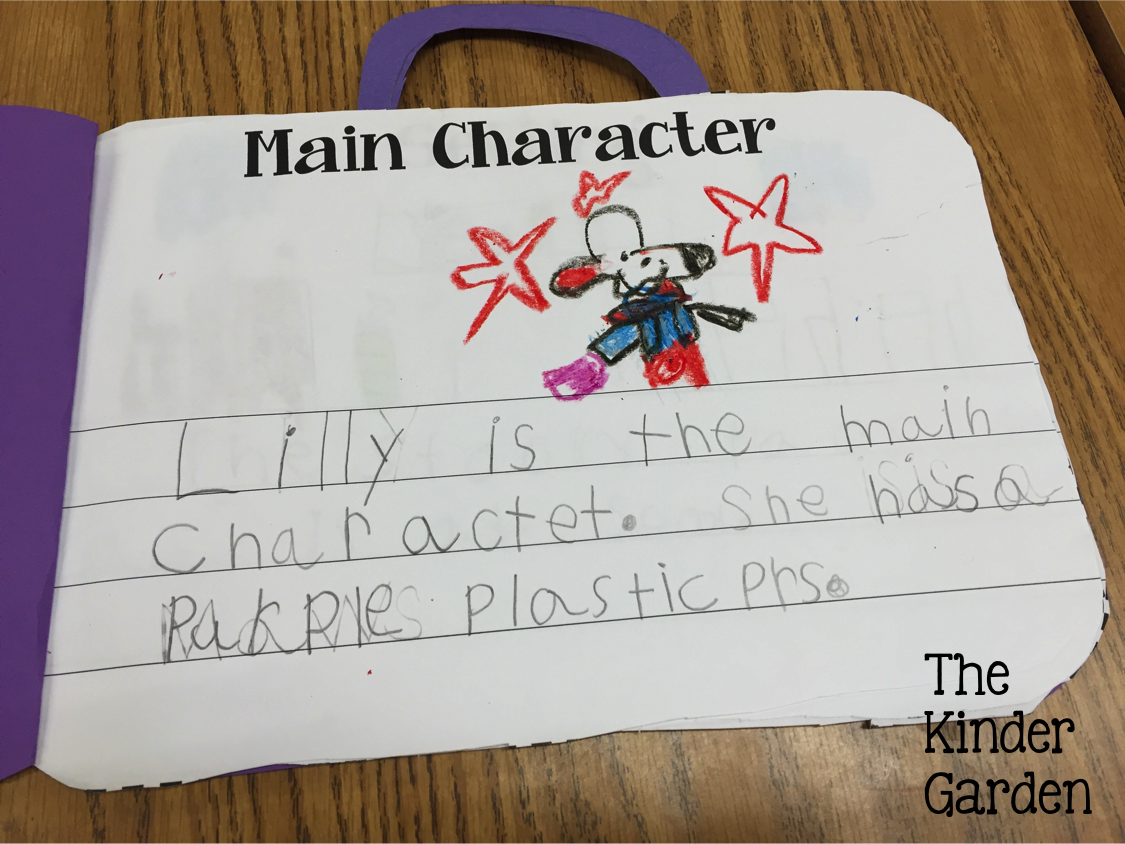
I liked this version because it is read by a teacher and she stops and asks little comprehension questions here and there! After hearing the story, we focused on story elements: characters, setting, plot, problem, and solution. Mind you, even though our activity on the third day focused on story elements, we had been talking about story elements and learning about them long before this day, so they had a little background knowledge. To make it fun, we made a little book in the shape of a purse: Lilly's Purple Plastic Purse Story Elements! The kids did SUCH an awesome job writing and illustrating these details about the story. They absolutely loved that they had their own little plastic purse at the end, too! It was the perfect culminating activity for this story.


Another Kevin Henkes book that I love reading to my students is Kitten's First Full Moon. It's a simple book, but a great beginning book for teaching students how to retell and summarize a story.


First, I read the story aloud and, as we go through the story, I'll stop periodically and ask my students what the kitten did using order words such as first, next, then, after that... this helps them recall the order that events occurred in the story because they've got that vocabulary to guide them. After discussing the main events in the story, I modeled how to summarize the story in their own words. I told my kids excitedly that they would get to tell the story with the words that THEY wanted, as if they were going to be the author. They were so into it! I whipped up this little writing craftivity to put with their summaries and they turned out so great! In the story, the kitten sees the moon and is attempting to get to it because he thinks it is a bowl of milk. In the craftivity, he is peeking over the edge to try and get to the moon, which is popping off the page 3D style!


Here are some student samples of the Kitten's First Full Moon story summary craftivity:


If you're interested in adding this story summary/reading comprehension craftivity to your Kevin Henkes' study, you can grab it from my TPT store by clicking the picture below! There are multiple differentiated writing template options available in the pack to help you best fit the needs of your students!

 photo Kitten Full Moon_zpsde9wmaps.png

I could go on and on about all of his books... they are all wonderful options for teaching story elements and reading comprehension skills! What are some of your favorite Kevin Henkes books?

Saturday, November 28, 2015

Top Wishlisted Products!

If you haven't heard, the annual TPT Cyber Monday Sale begins November 30th! I have been flooding my personal TPT Wishlist with tons of items I've had my eye on, and I'm sure you have too! 


I'm linking up with Jen over at Teaching in the Tongass for Top Wishlisted Items! These are the top 3 products in my store that people have put on their wish lists. There is also some customer feedback attached from teachers that personally used each one!


Shapes Galore for the Common Core is not only my top wishlisted item, it's also the top selling product in my store! This pack includes fun activities and resources for teaching 2D and 3D shapes. In this unit, you'll find classroom resources, decor, games, printables, and more to help you teach these geometry standards. Click here to get a closer look at all that is included!


My Kindergarten Journeys Interactive Notebooks for Leveled Readers are made to go along with the Journeys curriculum and are a great supplement to add to your teaching resources. There are differentiated, leveled interactive notebook activities that go with all of the leveled readers in Unit 1. As I was using the leveled readers with my own students, I found that I really wanted something concrete that they could work on all of the reading concepts and skills that I could show their families as a record of their progress... and this is what I came up with! My kids really enjoyed using them and creating them in their own reader's notebooks. I also have sets for units 2-6 as well! Click here to see pictures of the notebooks in action!


Counting Tools for Back to School is a comprehensive teaching resource that can be used to help you teach all of the Counting and Cardinality standards in a fun, engaging way! There are classroom anchor charts, assessments, math stations, games, number sense printables, teaching resources, and more! You can use these activities all year long! Click here to check it out!

Hopefully you found a few great items that you can add to your wishlist for the big sale! You can find other great items by heading on over to Teaching in the Tongass to see what other top items TPT sellers have in their shops - and even link up yourself, if you like! Happy shopping!